
2026 State of the Workforce: The New Workplace Reality and How to Navigate the Pivot
March 13, 2026 | State of the Workforce
The workplace has undergone a monumental shift in the past several years, fundamentally changing how employees experience their work. WSA’s research dives deep into this evolution, analyzing a mountain of data to understand the evolving expectations between organizations and their employees.
Executive Summary
The workplace has undergone a monumental shift in the past several years, fundamentally changing how employees experience their work. Workforce Science Associates’ (WSA) research dives deep into this evolution, analyzing a mountain of data to understand the evolving expectations between organizations and their employees. This paper is designed to provide clarity. Clarity on what the data is really saying, clarity on what to do, and clarity about what earns trust from employees and credibility with leadership. A playbook of sorts.
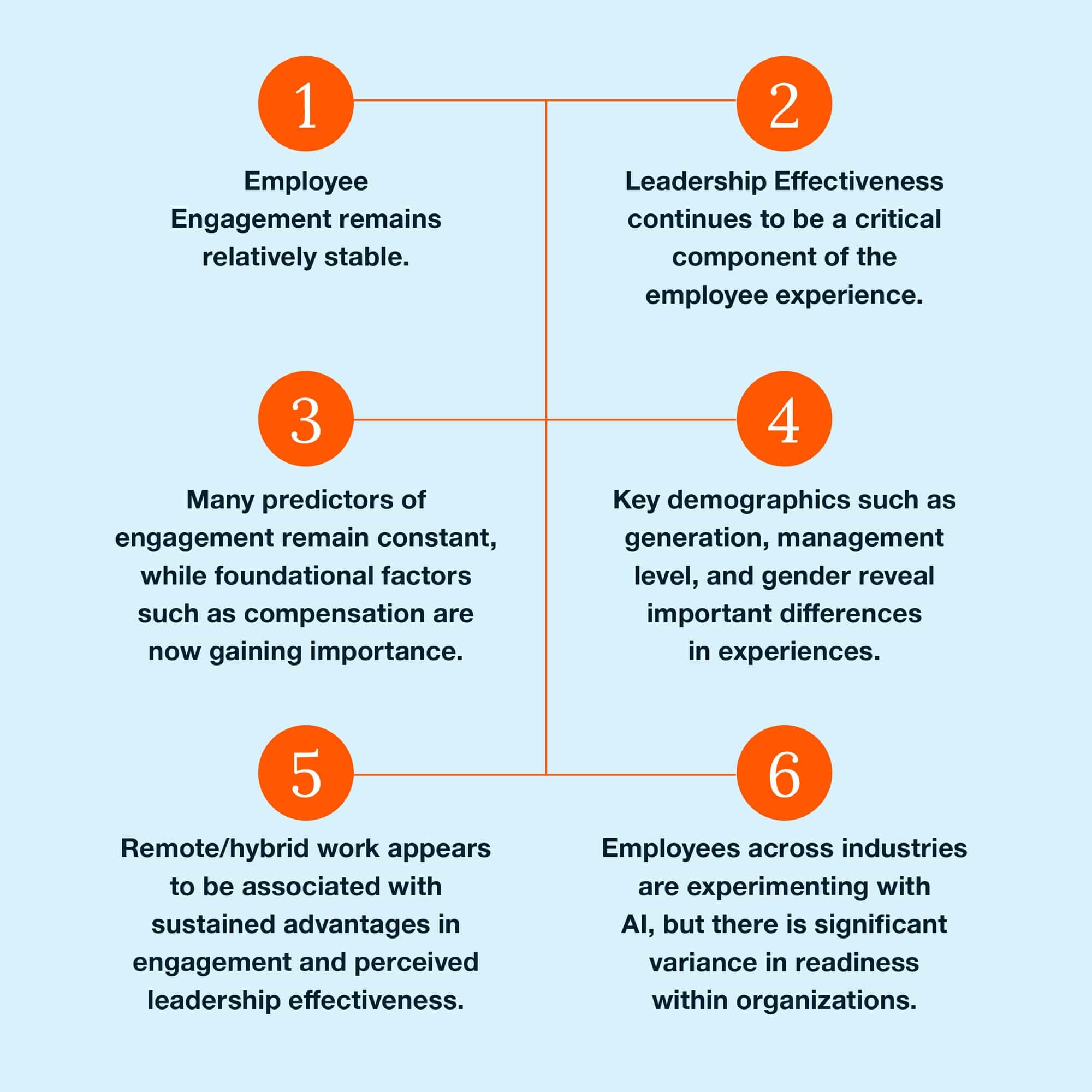
With numerous internal and external pressures impacting workforces in the current global landscape, it becomes impossible to address all of them. In pursuit of providing the aforementioned clarity, our focus within this paper includes the following:
- Analysis of trends of the long-standing metrics of employee engagement and leadership effectiveness
- Top predictors of engagement and leadership effectiveness
- Exploration of the drivers of engagement between top- and bottom-performing companies from our database
- Gender and management level trends as well as generational divides
- Work arrangement dynamics and return-to-office pressure points
- Insights around AI within the workforce and essential actions to build employee confidence and capability
Discover where your organization needs to stay the course and where it must evolve. Explore the full findings and benchmark your organization’s strategy with WSA’s 2026 State of the Workforce findings.
Key Findings
Engagement & Leadership Effectiveness Trends
WSA has been studying employee engagement and leadership effectiveness for decades. However, in the past seven years, so much of the world of work has been in a state of constant change that merely reporting on these two critical metrics of the workforce on an annual basis does not provide leaders with the relevant data needed to address the ever-changing needs of their workforces. Beginning in 2019, WSA has meticulously tracked the pulse of the global workforce, measuring employee engagement and leadership effectiveness every six months. Our data reveals a critical shift: while organizational loyalty is holding fairly steady, the bond between employees and their direct leader has elevated significantly throughout the years.
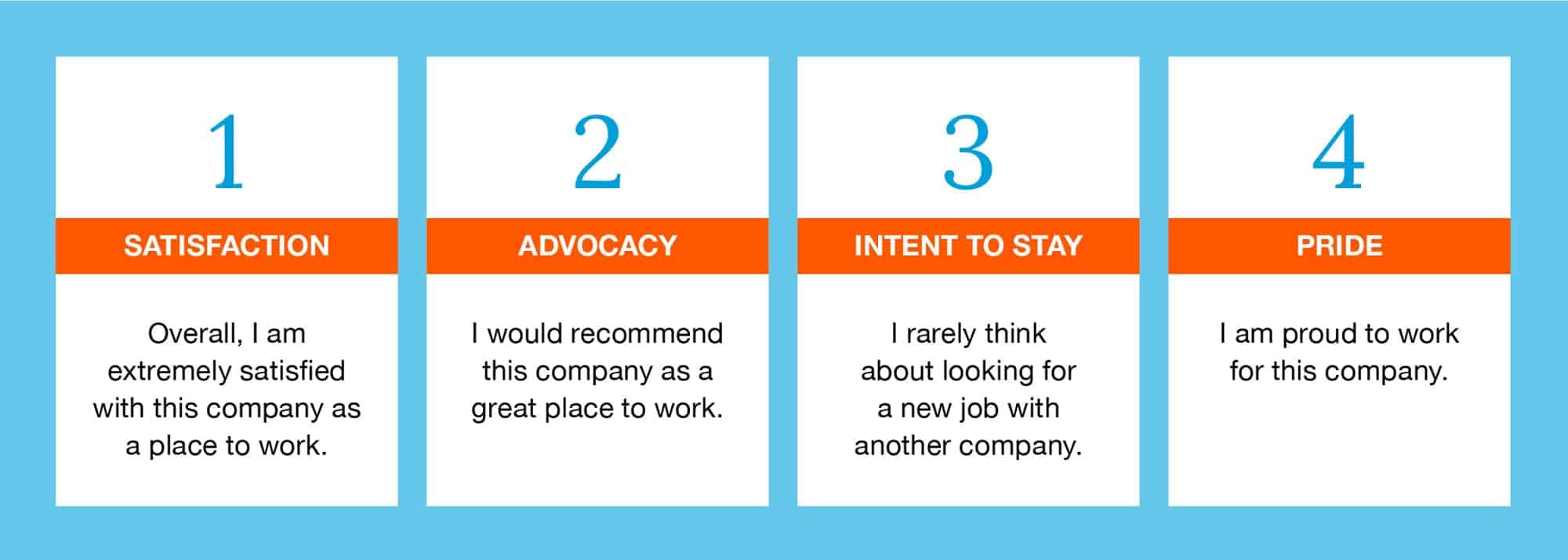
WSA’S FOUR-ITEM ENGAGEMENT INDEX
The Great Decoupling
At WSA, we define engagement through a rigorous lens: the intersection between overall satisfaction, organizational advocacy, the long-term intent to stay, and internal pride. Between 2020 and early 2021, engagement remained remarkably stable as shown in Figure 1. Even as unemployment hit 6.1% in H1 2021 (U.S. Bureau of Labor Statistics), engagement held firm; this represents a phenomenon we call “the gratitude effect,” where employees lean into their roles during times of economic scarcity. However, as the “great re-entry” took hold and unemployment dropped to 4.6% by the end of 2021, the tide turned. That coincided with a significant 4 percentage point drop in employee engagement. As an initial reaction (that did not sustain), employees may have found themselves starting to feel less bound to, or emotionally invested in, their employers when there were potentially more options to consider within the economic landscape. Yet, through this turbulence and continuing through our latest 2025 data update, one metric has remained rock-solid: leadership effectiveness.
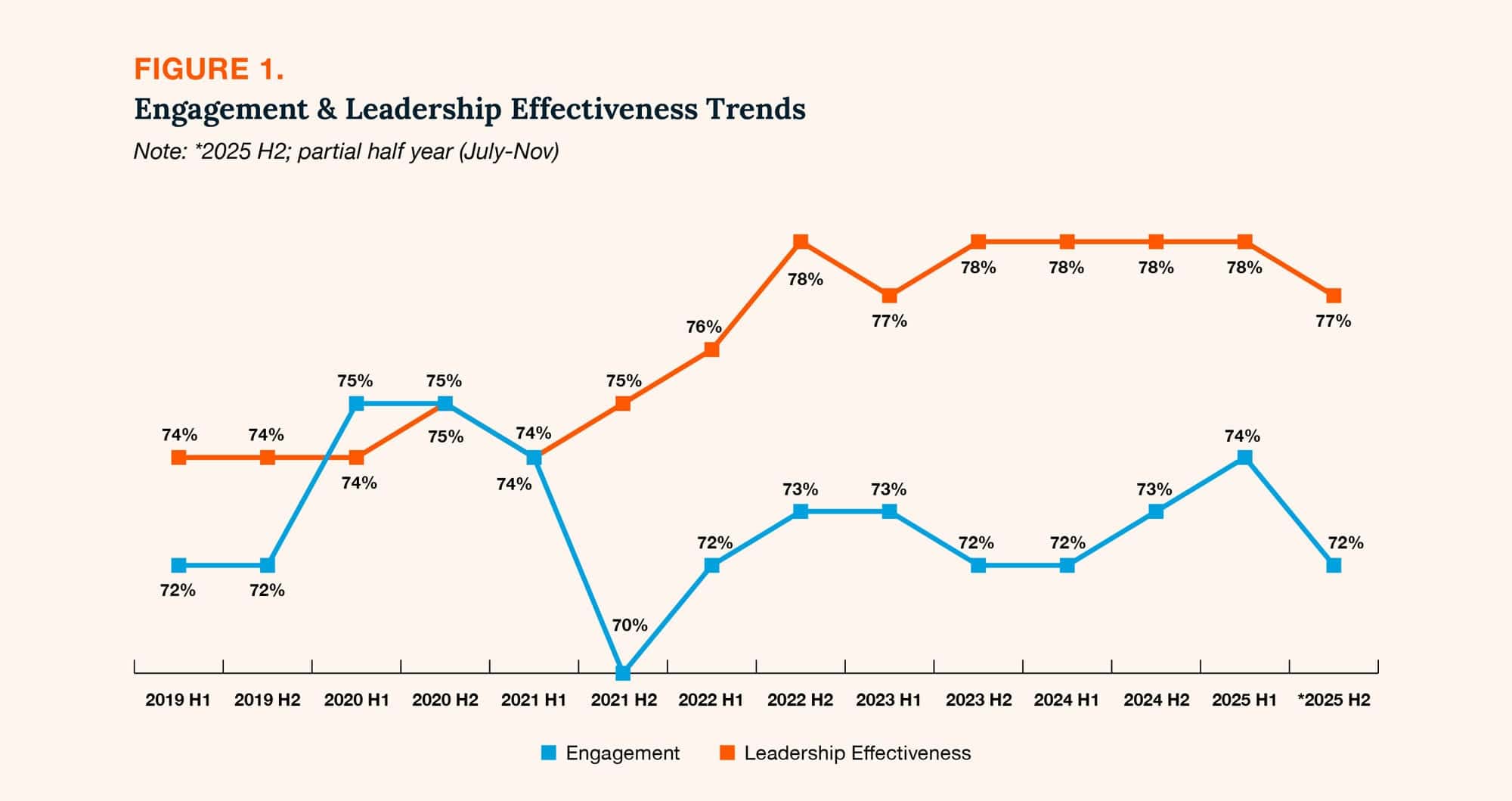
The takeaway is clear. Over the last four and a half years, employees have had a roller coaster ride with their affinity for what could be described as the “faceless” organization, transferring more loyalty to their immediate supervisors or managers. In a world of remote/hybrid work and shifting priorities, the leader is the primary connection to the company. Understanding this critical point, leaders must prioritize the key predictors of engagement to provide a more holistic employee experience. By aligning leadership actions with what employees want and need most, companies can unlock higher levels of engagement and, in turn, stronger business outcomes.
Download the Full Report Below
Authors:
Robert Weldon, Ph.D., Director of WSAdata and Chief Data Scientist, WSA
Sheena Lyons, M.S., Executive Consultant, WSA
Kris Erickson, Co-Founder and Executive Consultant, WSA
James Longabaugh, Ph.D., Director of Consulting, WSA
Cameron Klein, Ph.D., Executive Consultant, WSA
Randy Sterns, MBA, Executive Consultant, WSA
Request PDF Report
To access this complete State of the Workforce report, enter your name and email below.